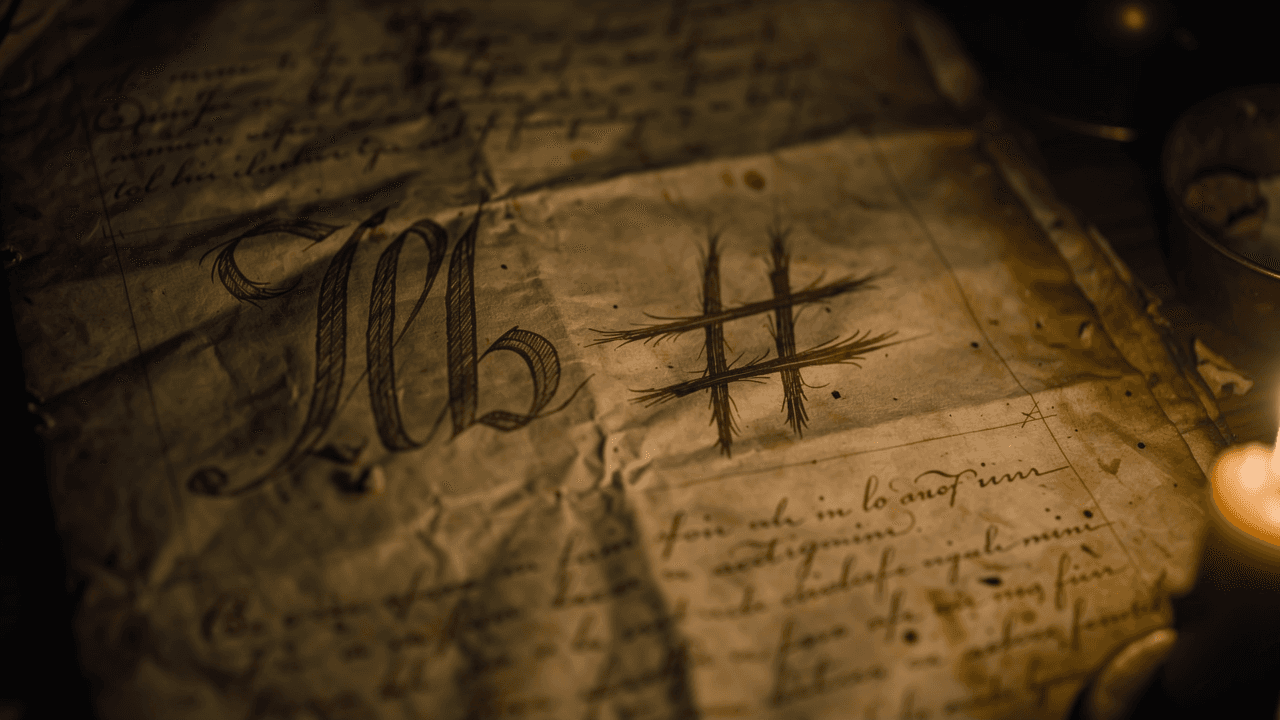
The # symbol did not start as a hashtag, a number sign, or anything to do with computers. It started as a way to write “pound,” the weight, and the trail runs all the way back to ancient Rome.
“Libra pondo” — a pound by weight
Romans measured weight in the “libra,” a unit of roughly 329 grams, close to today’s pound. The full phrase for a pound was “libra pondo,” literally “a pound by weight,” where “pondo” meant “by weight.” English quietly kept both halves of that phrase. We took the word “pound” from “pondo,” and we abbreviate pounds of weight as “lb” from “libra.”
The same Latin root spread further than most people realize. The British currency sign “£” is a stylized capital L, also from libra, which is why a pound of money and a pound of weight share a name and an ancestor. One Roman word for a unit of weight seeded an abbreviation, a currency symbol, and, eventually, the hashtag.
The crossed “lb” that became #
Scribes writing “lb” by hand added a horizontal stroke across the tops of the two letters. That bar, sometimes called a tittle or titulus, was a standard medieval signal that the letters were an abbreviation rather than a word. You can still see this crossed form, ℔, preserved in some old type and in Unicode today.
Now picture writing that crossed “lb” quickly, thousands of times, in commercial ledgers. The loops of the letters flatten. The bar stays. A second cross-stroke creeps in. Over generations of hurried bookkeeping the abbreviation drifted away from anything that looked like “lb” and settled into a tidy grid of two horizontal and two vertical strokes: #. The writer Keith Houston traced this path in detail in his book on punctuation, “Shady Characters,” and it is now the most widely cited account of where the symbol comes from.
Why # means both “pound” and “number”
Because the mark grew out of weights and measures, it carried two jobs into modern American usage. Placed after a figure it means pounds of weight: “5#” on a sack of flour reads “five pounds.” Placed before a figure it means “number”: “#1” reads “number one.” Counting and weighing were the same daily work in a shop or a warehouse, so the same little symbol did both.
This is also why Americans call # the “pound sign” and reach for it on a phone keypad without a second thought, while much of the rest of the English-speaking world calls the very same key something else entirely. That split, and the surprising pile of other names the symbol answers to, is the next chapter.