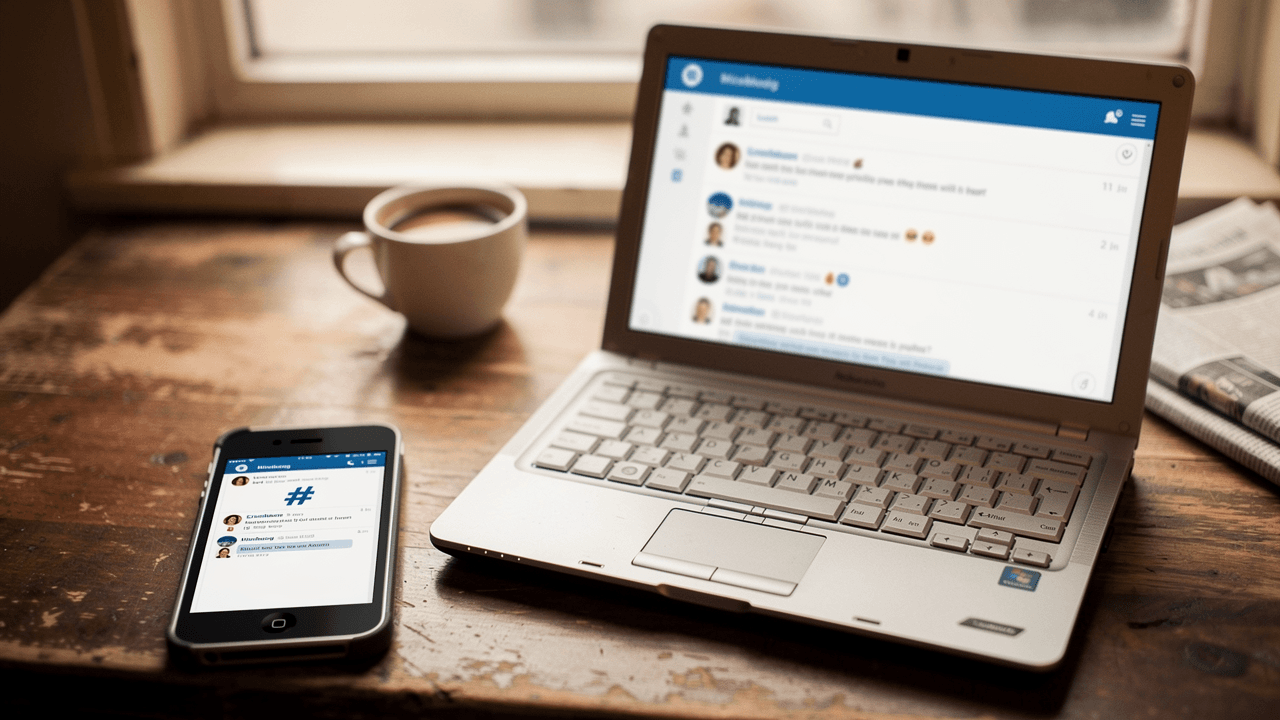
The hashtag has a clear birthday. On 23 August 2007, a designer and open-web advocate named Chris Messina posted a simple question on Twitter, and a symbol with two thousand years of history quietly took on its newest job.
The tweet
Messina wrote: “how do you feel about using # (pound) for groups. As in #barcamp?” The idea came straight from IRC, where # had marked channels for nearly twenty years. He wanted a lightweight way for people at the same event, or interested in the same subject, to find one another’s posts, with no new feature required. It was a convention, not a product: anyone could start using it that afternoon.
A cool reception, then a wildfire
Twitter was not impressed at first. The company reportedly thought the symbol looked too technical and nerdy for ordinary people. What changed minds was real use. During the October 2007 wildfires in San Diego, people followed and shared updates under #sandiegofire, and the value of a single searchable tag during a fast-moving emergency became impossible to ignore.
The word itself came from the community rather than the company. The technologist Stowe Boyd is widely credited with putting “hash” and “tag” together as “hashtag” in a 2007 blog post. Twitter finally turned hashtags into clickable links in 2009 and built trending topics around them, and from there the convention spread to Instagram, Facebook, YouTube, TikTok, LinkedIn, and Pinterest.
How a punctuation mark moved the world
Once hashtags were clickable and searchable, they became infrastructure for movements. #IranElection carried protest news in 2009. #OccupyWallStreet organized a movement in 2011. #BlackLivesMatter, started by Alicia Garza, Patrisse Cullors, and Opal Tometi in 2013, became one of the most consequential tags in history. #MeToo, a phrase coined by activist Tarana Burke in 2006, went global as a hashtag in 2017. Brands, campaigns, and live TV all learned to speak in tags.
The reason it worked is the same reason Messina’s idea was almost rejected: it asked nothing of anyone. No sign-up, no new button, no permission, just a # in front of a word. It handed ordinary people the power to name a topic and gather around it.
The part the story usually leaves out
Messina never tried to patent or own the hashtag. He gave it to the commons on purpose, and that openness is exactly why it spread. But there is a catch that fifteen years made obvious: you can use a hashtag, you can even popularize one, yet you never actually own it. It lives on someone else’s platform, organizing someone else’s feed, and the reach you build on it disappears the moment the algorithm changes.
That is the thread hashtag.org picks up. It lets you claim your hashtag as a #Name, a permanent, map-pinned portal with its own AI agent that no platform can demonetize or delete. The symbol started as a mark of ownership, a Roman pound, a number, a thing you counted and kept. After two thousand years and one very good tweet, owning your # is finally an option again.