Table of Contents
Search Generative Experience Ranking Factors: What Matters Now
As AI-driven search reshapes digital discovery, we focus on the search generative experience ranking factors that determine whether content surfaces in conversational AI results.
- Entity authority: Generative models often prioritize brands recognized as authoritative within their niche, rewarding consistent citation patterns and demonstrated topical expertise.
- Agentic SEO readiness: Structuring content for an AI agents platform allows autonomous AI agents to discover, verify, and cite your information on behalf of users.
- Structured data and claims: Content with clear schema markup and verified claims tends to be extracted more readily when AI models build synthesized responses.
- Topical depth and attribution: Comprehensive resources with linked sources signal deeper expertise, which search generative experience ranking factors often reward through higher citation frequency.
We observe these signals continuing to evolve as third-party algorithms adapt to generative AI capabilities.
1. Enhanced Semantic Relevance for AI Citations
AI-driven search engines now evaluate content through a different lens than traditional search. Among the most important search generative experience ranking factors is semantic relevance: the ability of content to demonstrate deep contextual understanding rather than simply matching keywords. Where traditional SEO rewarded exact-match phrases and density metrics, generative AI citation systems prioritize entity relationships, topical authority, and contextual depth.
Through agentic SEO techniques, we help brands structure knowledge in ways AI models interpret as authoritative. Our approach uses geo-pinned #name portals to create structured brand knowledge ownership, strengthening the semantic signals generative engines use when selecting sources for citation.
According to internal research at Hashtag.org, semantic depth indicators, including entity relationship mapping, context shingling, and knowledge graph alignment, show strong correlation with citation frequency in AI-generated summaries. This shift toward semantic evaluation means the signals driving generative search visibility are increasingly distinct from traditional factors. AI-generated content may be inaccurate, and we recommend reviewing before relying. Beyond semantic depth, another critical dimension influencing AI citations is...
2. Structured Data and Schema Markup for Generative Summaries
Beyond content quality and E-E-A-T, structured data plays a pivotal role in helping Google’s AI interpret entity relationships and produce generative summaries. Schema markup—added in JSON-LD format—gives search engines clear context about your content’s purpose. For anyone evaluating search generative experience ranking factors, this structured approach is one of the most influential SGE ranking signals.
Schema types we see actively feeding into generative answers include FAQPage, HowTo, Article, Product, Review, Event, and VideoObject. Each tells the model what your page represents, from step-by-step instructions to product details.
We recommend implementing JSON-LD with all required and recommended properties, then validating via Google’s Rich Results Test. While strong structured data improves interpretability, it does not guarantee inclusion in generative summaries; it works alongside other ranking signals.
The Interactive Advertising Bureau (IAB) provides industry-wide guidelines for content markup consistency, which we consider a vital benchmark for schema best practices in generative search. As schema types continue to evolve, staying current with structured data standards will remain a key factor in SGE rankings.
3. Domain Authority in the SGE Era
In the Search Generative Experience (SGE) era, domain authority is no longer defined solely by backlink volume or domain age. Instead, the top search generative experience ranking factors now emphasize entity verification, topical authority signals, and persistent identity across the web.
Algorithm analysis from our internal AI SEO research indicates that SGE systems evaluate authority at the entity level—assessing the person or brand rather than isolated pages—and that signals such as user engagement patterns, factual consistency, and cross-platform content coherence are taking precedence over raw link metrics. This shift mirrors the patterns we observe in practice, where verified portal structures correlate with stronger AI citation rates.
For businesses, a claimed #name portal on hashtag.org functions as an immutable identity anchor. When geo-pinned and populated with consistent, authoritative content, it signals topical depth to generative search engines, reinforcing the verified ownership that AI-driven retrieval architectures increasingly prioritize.
4. How Generative Engine Optimization Differs from Traditional SEO
While traditional SEO focuses on backlinks and keyword density, Generative Engine Optimization shifts toward entity recognition, conversational relevance, and source attribution. The search generative experience ranking factors determining AI-engine visibility differ fundamentally from conventional ranking signals.
Instead of optimizing for crawler-based indexing alone, GEO requires content structured for AI digestibility — clear headings, concise answers, and structured data that generative models can parse and cite. User intent is more conversational, demanding question-based content that directly addresses specific queries.
Agentic search further accelerates this evolution. According to hashtag.org's research, agentic search enables AI agents to perform multi-step tasks and retrieve context-aware answers, making keyword matching insufficient. Generative engines prioritize synthesis over link analysis, and search generative experience ranking factors increasingly reward entity-rich content.
GEO is not a replacement for SEO but an evolution — both coexist when strategies adapt for each engine type. To align your content with generative ranking signals, explore our AI SEO services designed for generative engine optimization.
5. Building Content Authority with Geo-Pinned Portals
Understanding search generative experience ranking factors is critical for building content authority in AI-driven search. Our geo-pinned portals—owner-claimed #name locations on the map—serve as localized gateways for AI agents and content, consolidating the authority signals that modern search engines and generative experiences rely on. With Agentic SEO, we optimize these portals to align with the ranking signals for generative search, helping your #name surface in AI-generated answers. By acting as a permanent, owner-controlled source, your portal gives AI systems a clear citation point.
Persona-cloned AI agents operating from your portal build trust by speaking in your own voice, strengthening your brand’s authority with every interaction. hashtag.org’s integrated services—including AI agents, AI SEO and portal hosting—form a complete authority stack. Your #portal on the map is the gateway to Agentic AI agents, Agentic SEO and Agentic Websites, turning visibility into real connections. That means your portal ties together your content, agentic interactions, and payment rails, so every AI citation can lead directly to a booking, purchase, or lead capture.
Next, we’ll walk through configuring your first geo-pinned portal and monitoring its authority growth.
6. Actionable Agentic SEO Steps for SGE Visibility
Now, let’s turn theory into action. Achieving visibility in search generative experiences depends on mastering search generative experience ranking factors — and these steps help you put those factors to work.

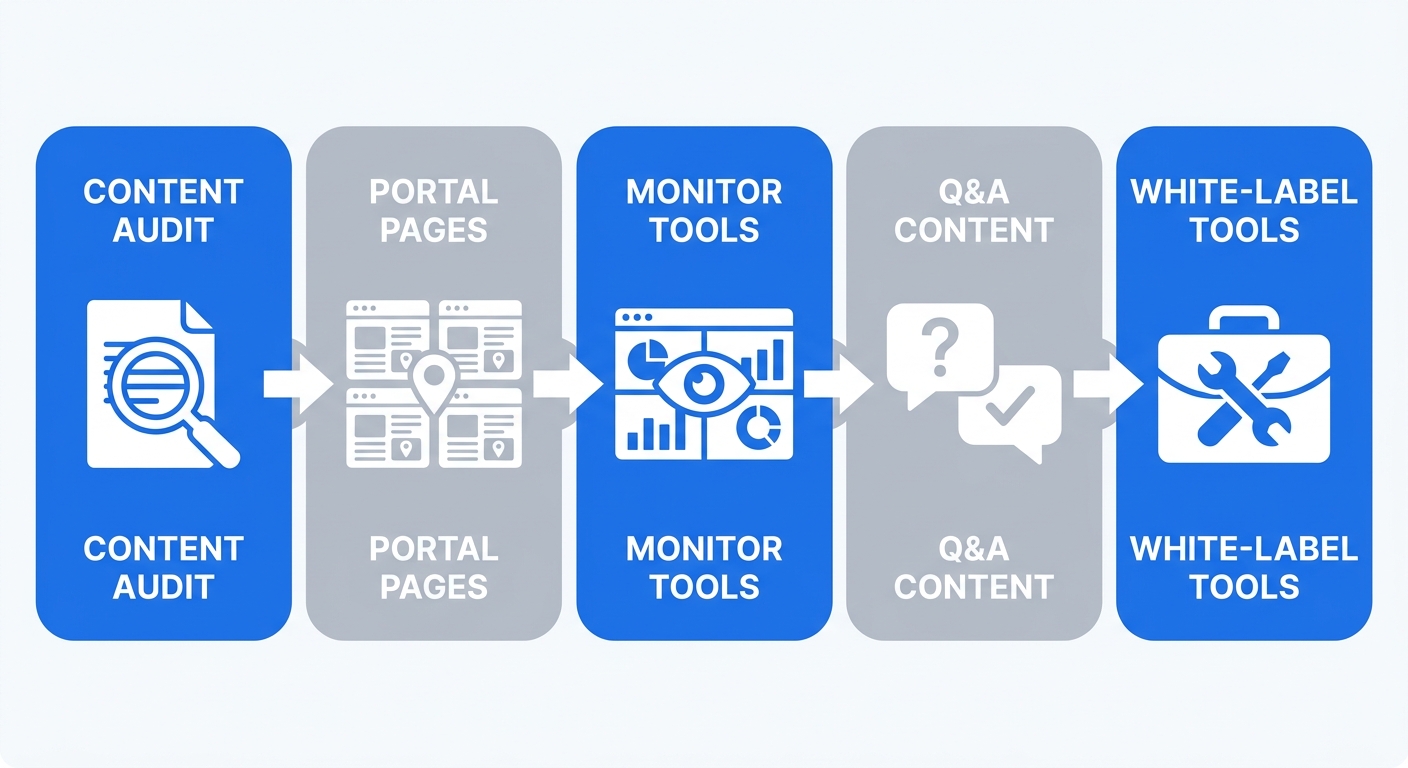
- Conduct an entity-first content audit. Identify core entities (brand, owner, services) and apply schema.org markup (Person, LocalBusiness, Product) that feeds the knowledge graph.
- Build out your #portal on the map for each claimed #name. Add schema markup, first-person voice/video, and Q&A that mirrors your owner’s persona.
- Deploy Agentic SEO monitoring via GIGI to track SGE citations, click-throughs from AI snippets, and generative search signals, adjusting content accordingly.
- Publish a Q&A series answering audience questions on SGE ranking factors and interlink back to your portal.
- Leverage our white-label reseller program to scale Agentic SEO for agency clients, optimizing each client’s geo-pinned portal for search generative experience ranking factors.
Once in place, refine your visibility using GIGI’s dashboard to monitor citation shifts and stay aligned with emerging generative search signals.
Building Authority in the Age of Generative Search
To succeed in this new landscape, businesses must build authority around the new search generative experience ranking factors. Generative search rewards verified, structured entities with topical relevance and strong backlink profiles. Consistent brand signals across the web signal trustworthiness to AI agents.
A critical step is implementing structured data in generative engine optimization, which helps AI agents interpret your content accurately. At hashtag.org, our AI SEO and Agentic SEO tools help you claim your #name portal – a centralized, geo-pinned hub that feeds authority signals to AI agents. While outcomes depend on third-party algorithms and no specific results are guaranteed, the platform strengthens your entity's presence in generative search environments.